

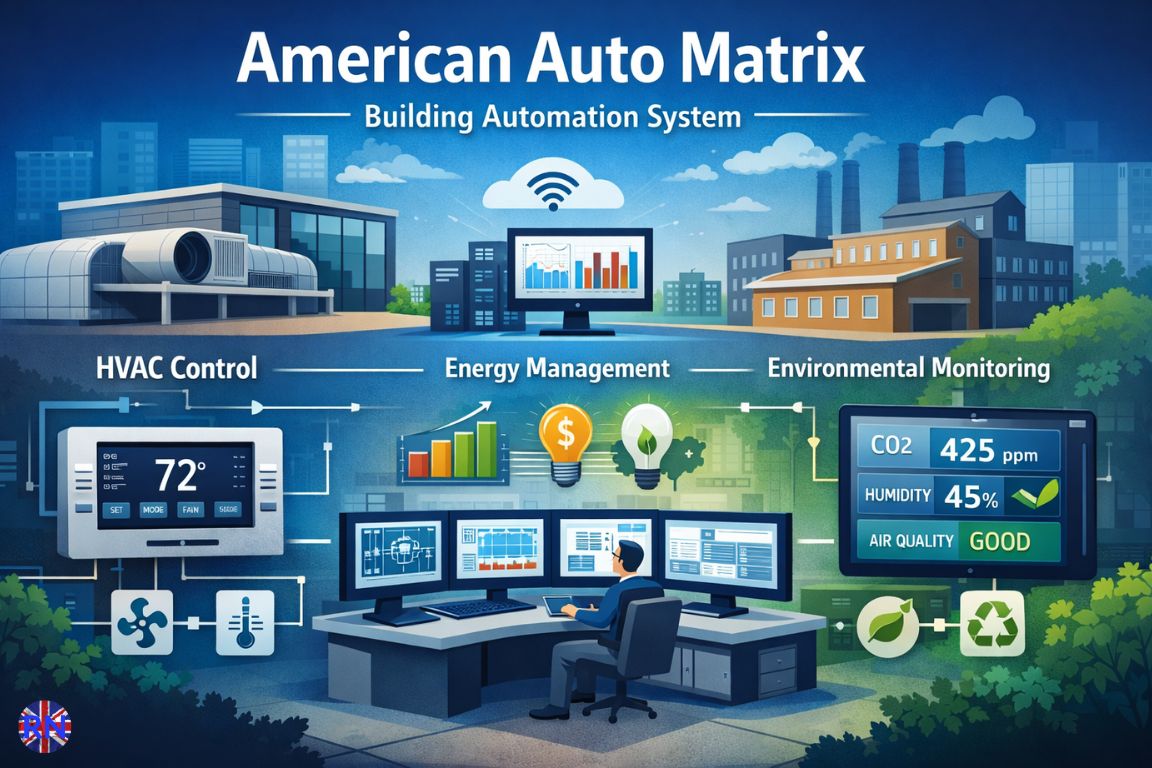
Modern buildings demand more than basic temperature control. They must deliver comfort, reduce energy use, and operate reliably day after day. Because heating and cooling systems consume a large share of building energy, automation plays a critical role in managing performance. American Auto Matrix was developed to meet these exact needs with a focus on stability, accuracy, and long-term use.
Instead of chasing short-lived technology trends, American Auto Matrix concentrates on dependable control strategies that support real buildings over many years. As a result, facility professionals often rely on these systems to maintain comfort while keeping operational costs under control.
The Vision Behind American Auto Matrix
American Auto Matrix was built with a clear purpose: give building operators direct and dependable control over mechanical systems. From the beginning, the platform emphasized clarity and consistency rather than unnecessary complexity.
Because buildings typically remain in service for decades, the system was designed to evolve gradually. Therefore, it supports open communication standards and avoids designs that force complete system replacements. This approach allows operators to adapt their buildings without disrupting daily operations.
How Intelligent Building Automation Operates
Building automation works by connecting sensors, controllers, and user interfaces into one coordinated system. Temperature sensors, airflow devices, and scheduling inputs continuously send data to controllers. In response, the system adjusts equipment operation in real time.
American Auto Matrix distributes this control logic across multiple devices. As a result, each area of the building can respond quickly to local conditions. Meanwhile, the system still works as a unified whole, which improves reliability and performance.
Control Architecture and System Design
American auto matrix controls provide the structure that keeps the system running smoothly. These controls manage both communication and decision-making at the equipment level.
Open System Design
Because the system uses open standards, it integrates easily with different HVAC components. This flexibility becomes especially valuable in older buildings where equipment upgrades happen in stages rather than all at once.
Distributed Control Logic
Instead of relying on one central controller, each device handles its own tasks. Therefore, the system continues to operate even if one component goes offline. This design reduces downtime and improves overall stability.
Clear Programming Structure
Technicians can understand and adjust control logic without unnecessary difficulty. Consequently, troubleshooting and system updates take less time and effort.
American Auto Matrix Thermostats in Practice
The American Auto Matrix thermostat acts as the main connection between occupants and the automation system. Unlike residential thermostats, these devices are built for commercial environments where accuracy and durability matter.
They provide:
- Stable temperature measurement
- Clear setpoint control
- Reliable communication with zone controllers
Because of this design, occupants can adjust comfort levels while the system maintains overall efficiency.
Using the American Auto Matrix Thermostat Manual Correctly
The american auto matrix thermostat manual plays a critical role during installation and maintenance. It offers clear instructions that help technicians configure the thermostat correctly from the start.
Typically, the manual explains:
- Wiring connections
- Setup parameters
- Operating modes
- Diagnostic indicators
When teams follow the manual closely, they reduce configuration errors. As a result, the system performs as intended and avoids unnecessary service calls.
Benefits for Building Owners and Facility Teams
Buildings that use American Auto Matrix systems experience several long-term advantages.
Improved Energy Control
The system adjusts equipment based on actual demand. Therefore, it avoids waste while maintaining comfort.
Reliable Daily Operation
Because the controls operate consistently, indoor conditions remain stable throughout the building.
Lower Long-Term Costs
Durable hardware and flexible design reduce the need for frequent replacements. Over time, this lowers total ownership costs.
Better Operational Insight
System data helps facility teams plan maintenance and identify performance issues early.
Where American Auto Matrix Systems Are Used
American auto matrix controls support many building types where performance and reliability matter.
Office Buildings
Offices benefit from zone-based control that adapts to changing occupancy patterns.
Healthcare Facilities
Precise environmental control supports patient comfort and regulatory standards.
Educational Campuses
Schools manage varying schedules efficiently, especially during seasonal changes.
Industrial Facilities
Consistent control protects equipment and supports safe working conditions.
Installation, Integration, and Ongoing Care
Successful performance starts with proper installation.
Installation
Technicians must place sensors correctly and verify communication paths. Doing so ensures accurate system behavior.
Integration
Because the system supports open standards, it integrates smoothly with existing HVAC equipment and management platforms.
Maintenance
Regular reviews of control logic and reference to the thermostat manual help maintain long-term performance.
Solving Common Building Automation Issues
All automation systems face challenges. However, American Auto Matrix addresses many of them through thoughtful design.
- Modular components simplify troubleshooting
- Open protocols support gradual modernization
- Clear documentation improves user understanding
As a result, facility teams can manage the system efficiently throughout its lifespan.
Preparing Buildings for the Future
Buildings continue to evolve as energy standards and technology change. Therefore, automation systems must remain flexible without sacrificing reliability.
American Auto Matrix provides a stable foundation that supports future upgrades. Instead of forcing complete replacements, it allows buildings to adapt step by step. Ultimately, this approach protects long-term investments.
Conclusion
American Auto Matrix delivers a practical and reliable approach to building automation. Through dependable controls, professional-grade thermostats, and clear documentation, the system supports efficient building operation over many years.
For organizations that value stability, clarity, and long-term performance, American Auto Matrix remains a strong and proven choice.
FAQs
1. What buildings commonly use American Auto Matrix systems?
Commercial, healthcare, educational, and industrial buildings frequently rely on these systems.
2. Are American Auto Matrix thermostats easy to operate?
Yes. They offer straightforward controls while supporting advanced automation functions.
3. Why is the thermostat manual important?
It ensures correct installation and configuration, which directly affects system performance.
4. Can the system work with existing HVAC equipment?
Yes. Its open design supports integration with a wide range of equipment.
5. Is American Auto Matrix suitable for long-term use?
Yes. The system was designed to support long service life and gradual upgrades.
