

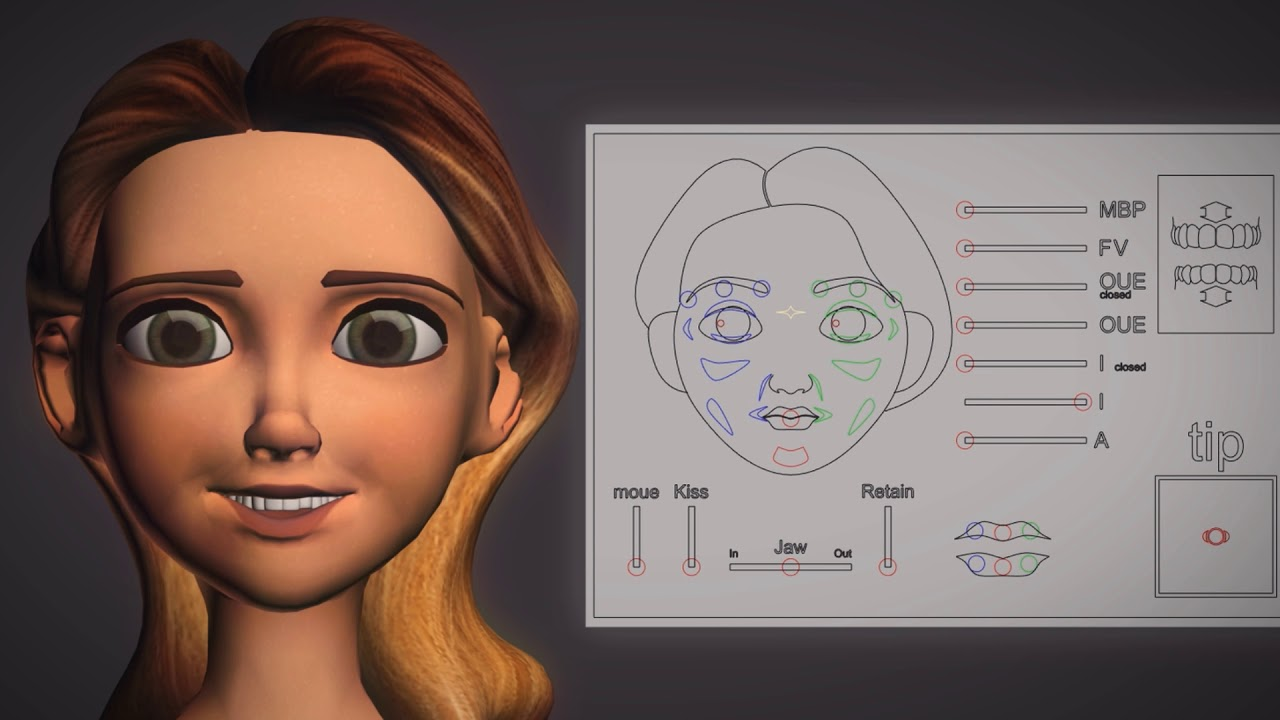
Synthesizing believable human faces and animating their expressions historically required intense manual processing within specialized sculpting suites. Animators spent days configuring complex polygon weights, matching lip movements to voice recordings, and adjusting micro-expressions frame by frame. Modern neural networks have fundamentally restructured this creative pipeline, allowing digital artists to build and animate vocal portraits from a minimal setup. These processing frameworks interpret structural landmarks automatically, allowing swift deployment of virtual personalities for multimedia production.
The Structural Architecture of Portrait Synthesis
To establish a functional virtual model, contemporary generation networks rely on deep learning facial recognition maps and generative adversarial frameworks. The system evaluates structural human proportions, identifying key focal points such as the exact borders of the eyelids, the contours of the jawline, and the depth of the nasal bridge. After calculating these coordinates, the software can anchor custom graphical layers onto a stable geometric mesh, producing realistic lighting and smooth transformations during motion cycles.
Users manage the final stylistic output by applying specific structural parameters or supplying audio overlays. Rather than using subjective descriptions, successful creators provide explicit instructions regarding lighting angles, focal depths, and structural symmetry. This technical clarity ensures that the rendered persona retains physical consistency, keeping the features perfectly aligned instead of drifting or distorting across consecutive visual sequences.
Enhancing Realism Through Audio Syncing and Expression Mapping
Breathed animation depends on clear temporal consistency and accurate phoneme tracking. When you link an audio file to a generated portrait, the processing engine scans the voice data for specific phonetic cues. It matches mouth shapes directly to vowel sounds, adjusting cheek muscles and jaw positioning simultaneously to avoid the unnatural detachment frequently seen in early automated dubbing tools.
Beyond basic speech mechanics, modern systems allow creators to dictate micro-expressions to convey nuanced states like concern, amusement, or fatigue. Subtle shifts, such as a slight narrowing of the eyes or a minor asymmetrical tilt of the mouth, completely alter the reception of a scene. Integrating these minor physical reactions removes the vacant expression characteristic of basic digital avatars, offering a convincing interactive experience for viewer audiences.
Practical Design Applications and Interactive Development
Deploying specialized design software offers notable production advantages across multiple contemporary multimedia channels. In game development, creators use a Facewow AI character generator utility to rapidly prototype non-player cast members and generate detailed dialogue loops without overextending internal art departments. This rapid pre-visualization allows writers to test conversation trees in real-time, verifying narrative pacing before dedicating expensive manual voice capture and full-body rendering schedules to the scene.
Digital marketers also apply portrait animation tools to build custom interactive guides for online platforms. A brief, talking profile that explains complex navigation instructions or product variations retains customer focus much better than a standard walls-of-text manual page. These localized assets lower operational support costs while increasing overall conversion rates on e-commerce interfaces.
Optimizing Input Assets for Accurate Facial Mapping
The visual quality of a completed rendering relies heavily on the texture resolution and camera orientation of your source files. Uploading blurry, pixelated, or heavily compressed reference pictures results in processing anomalies, as the algorithm struggles to differentiate between facial borders and background artifacts. Providing front-facing, balanced lighting exposures allows the network to calculate flawless mapping variables across every quadrant of the canvas.
Managing the motion scale limits within the rendering control room also determines visual stability. Pushing generation strength to maximum limits usually causes fluid morphing, leading to unnatural pixel tearing along the jaw or eyes. Keeping these parameters within balanced boundaries produces subtle, believable movements, preserving the core structure of the subject across every frame sequence.
Infrastructure Selection and Deployment Efficiency
Choosing between server-managed cloud engines or local hardware configurations requires analyzing your computational power and database privacy rules. Browser-based cloud clusters execute deep matrix operations instantly, allowing creators to run high-resolution character animation tasks from basic office setups or mobile devices. Conversely, configuring dedicated local system setups demands high-performance graphic card arrays, though it removes subscription costs and ensures absolute offline data protection.
As generation architectures continue to advance, synthesized portraits will match authentic film captures across all performance metrics. By mastering specific physical parameters and employing flexible tracking platforms, contemporary designers can successfully incorporate automated character generation into their standard production pipelines.
