

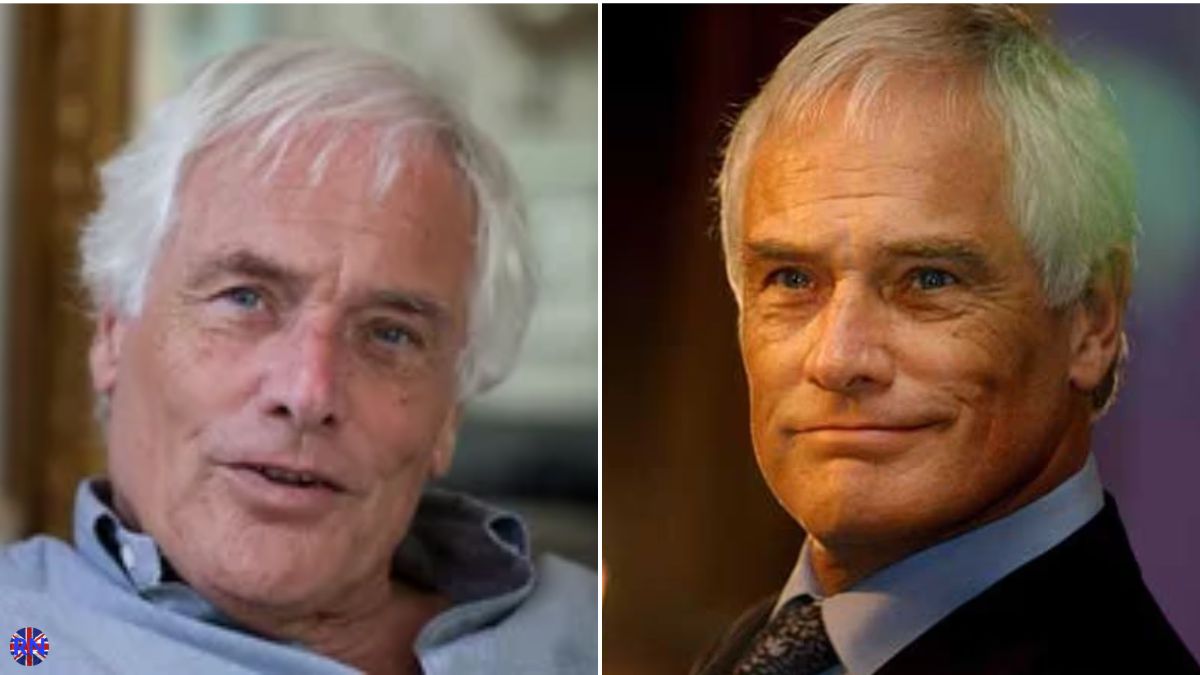
Robert Kilroy-Silk is a British broadcaster, former Labour MP, and former Member of the European Parliament whose career has moved between Westminster politics, daytime television, and Eurosceptic politics. Born in Birmingham in 1942, he first became known in political circles as a Labour politician before becoming one of the most recognizable faces on British daytime television.
His BBC programme Kilroy made him a household name, running for almost 18 years and turning his direct, often confrontational interviewing style into a distinctive television identity. He later returned to politics, joining the UK Independence Party (UKIP), winning a seat in the European Parliament in 2004, and founding the short-lived Veritas party in 2005.
Today, Robert Kilroy-Silk is best remembered for the unusual combination of careers he built. He was a university lecturer before entering Parliament, left Westminster to become a major television presenter, and then returned to elected politics at European level.
Early Life and Family Background
Robert Michael Silk was born on May 19, 1942, in Birmingham, England. His early childhood was shaped by the loss of his biological father, William Silk, a Royal Navy serviceman who was killed during the Second World War when Robert was still a baby.
His mother, Minnie Rose Silk, later married John Francis Kilroy, a family friend and car worker. Robert was subsequently known by the double-barrelled surname Kilroy-Silk, combining the names associated with his biological and adoptive family backgrounds.
His early education did not immediately point toward an elite academic career. He failed the eleven-plus examination on his first attempt and initially attended a secondary modern school. He later passed a review examination and went to Saltley Grammar School in Birmingham.
From there, his academic path changed considerably. Kilroy-Silk attended the London School of Economics, where he studied politics and economics. The institution gave him a strong foundation for the political and academic career that followed.
Academic Career Before Politics
Before becoming a politician, Kilroy-Silk worked in academia. After completing his studies, he became a politics lecturer at the University of Liverpool in 1966.
He remained at the university until 1974, when he entered the House of Commons. His academic background was reflected in his early political interests and writing. In 1972, he published Socialism Since Marx, a work examining socialist political thought.
The move from university lecturer to elected politician was a major turning point. By the mid-1970s, Kilroy-Silk had established himself as a Labour candidate and was ready to take his political career to Westminster.
Robert Kilroy-Silk as a Labour MP
Kilroy-Silk was elected to Parliament at the February 1974 general election as the Labour MP for Ormskirk. He represented the constituency until its abolition at the 1983 general election.
Following the boundary changes, he successfully contested the newly created Knowsley North constituency. He remained its MP until October 1986, when he left the House of Commons. UK Parliament records confirm that his Commons career lasted from February 28, 1974, to October 1, 1986, and that he served on the Home Affairs Committee during part of that period.
His decision to leave Parliament was unusual because it did not mark the end of his public career. Instead, it opened the door to a completely different form of national prominence.
Television would soon become the central part of his professional life.
The Rise of Kilroy
In 1986, Kilroy-Silk moved from Westminster into television presenting. His BBC daytime programme initially appeared under the title Day to Day before becoming known simply as Kilroy.
The format centered on topical social and moral issues. Kilroy-Silk would interview members of the public and experts while encouraging discussion about subjects that often generated strong reactions.
The programme quickly became associated with its presenter. His direct interviewing style and willingness to challenge guests helped make Kilroy one of the recognizable daytime discussion programmes of its era.
The series began in November 1986 and continued until January 2004, giving Kilroy-Silk almost two decades as a prominent BBC television personality.
His television career also brought appearances and production credits beyond his main programme. IMDb lists him in connection with productions including Love Hurts, Birds of a Feather, and Have I Got News for You.
Why Did Kilroy End?
The end of the BBC programme became one of the most controversial episodes of Kilroy-Silk’s career.
In January 2004, the BBC halted Kilroy following controversy surrounding comments he had published about Arabs in a newspaper article. The remarks produced widespread criticism and prompted the broadcaster to take the programme off air.
The controversy marked a dramatic break with his television career. After years of being one of the most familiar faces on BBC daytime television, Kilroy-Silk was suddenly at the center of a national debate over his comments and the boundaries of broadcasting.
The incident also helped set the stage for his return to frontline politics.
Return to Politics With UKIP
Only months after leaving television, Kilroy-Silk entered a very different political arena.
He joined the UK Independence Party and became one of its most prominent public figures during the 2004 European Parliament election campaign. The party was campaigning against Britain’s membership of the European Union, and Kilroy-Silk’s existing national profile gave UKIP an unusually well-known political figure.
He was elected as a Member of the European Parliament for the East Midlands in June 2004. The European Parliament’s official records show that he represented the UK Independence Party during the sixth parliamentary term, from July 2004 until July 2009.
His arrival strengthened UKIP’s visibility, but his relationship with the party leadership quickly became difficult.
Kilroy-Silk publicly challenged the direction and leadership of UKIP and sought a greater role within the party. His ambitions eventually produced a serious internal dispute.
By January 2005, he had left UKIP.
Founding the Veritas Party
After leaving UKIP, Kilroy-Silk launched a new political party called Veritas. The name comes from the Latin word for “truth.”
The party was officially launched in February 2005 and focused heavily on issues including immigration, crime, and Britain’s relationship with the European Union. Kilroy-Silk positioned himself as a straightforward alternative to the established political parties.
His new party attracted considerable attention because of his personal profile. However, Veritas did not develop into a lasting political force.
Kilroy-Silk served as the party’s leader during 2005, but his leadership was brief. He resigned later that year, bringing another short chapter of his political career to an end.
His experience with UKIP and Veritas nevertheless became part of the wider story of British Euroscepticism during the years before the Brexit referendum.
European Parliament Career
Kilroy-Silk remained a Member of the European Parliament until 2009. His official European Parliament record provides a detailed account of his time in Strasbourg and Brussels.
During his parliamentary term, he was initially part of the Independence/Democracy Group before becoming a non-attached member. His national party affiliation remained UKIP. From 2007, he served on the Committee on Culture and Education.
His European political career was considerably shorter than his earlier period in the British House of Commons, but it connected his public profile with the growing Eurosceptic movement that later became a major force in British politics.
Robert Kilroy-Silk and His Political Legacy
Kilroy-Silk occupies an unusual position in British political history because he moved between Labour politics and a much more strongly Eurosceptic position later in his career.
His early parliamentary career took place within the Labour Party. Decades later, he became associated with UKIP and the campaign against deeper European integration.
The transition illustrates how dramatically his political identity changed over the course of his public life. His television fame also allowed him to enter political debates with a level of name recognition that most politicians could not easily acquire.
His role in the development of British Euroscepticism has led some commentators to place him among the figures who helped bring anti-EU politics into the mainstream before the Brexit referendum.
Personal Life and Marriage
Robert Kilroy-Silk married Jan Beech in 1963. The couple had met while they were young and have remained married for more than six decades.
Public biographical records identify two children from the marriage, a son named Dominic and a daughter named Natasha. Natasha has also had a connection with her father’s television career.
Kilroy-Silk has generally kept the focus of his public life on politics and broadcasting rather than providing extensive details about his family.
His long marriage to Jan has, however, remained a consistent part of biographical accounts of his life.
Where Does Robert Kilroy-Silk Live?
In 2015, Kilroy-Silk and his wife moved to Warleigh House in Devon. The historic property is a Grade II* listed country house near Bickleigh.
The house dates back centuries and has undergone several changes of use over time. It was briefly operated as a luxury hotel before returning to use as a private residence. Property and heritage records identify Robert and Jan Kilroy-Silk as its owners from 2015.
The Devon property has occasionally featured in reporting about Kilroy-Silk’s later life, reflecting the considerable change in circumstances from his working-class Birmingham upbringing.
Physical Appearance and Public Image
Kilroy-Silk became particularly recognizable during his television years because of his distinctive appearance and presentation style.
His silver hair, tanned appearance, formal clothing, and confident manner became closely associated with the Kilroy brand. IMDb lists his silver hair and suntan among his recognizable trademarks.
Rather than relying on physical appearance alone, however, his public image was primarily shaped by his interviewing style. He built a reputation for direct questioning and energetic debates, qualities that carried over into his later political appearances.
Robert Kilroy-Silk Net Worth
There is no dependable, independently verified public figure for Robert Kilroy-Silk’s current net worth.
Online celebrity websites publish widely different estimates, but these figures are not supported by sufficiently strong financial documentation to treat them as established facts. His career included parliamentary salaries, television work, production activities, writing, and political roles, but those elements do not provide a reliable basis for calculating his present personal wealth.
For that reason, a specific net-worth figure should not be presented as confirmed.
Interesting Facts About Robert Kilroy-Silk
- He began his career in academia. Before entering Parliament, Kilroy-Silk taught politics at the University of Liverpool.
- He was first elected to Parliament in 1974. His first constituency was Ormskirk, and he later represented Knowsley North.
- He spent nearly two decades on daytime television. Kilroy ran from 1986 until 2004.
- He returned to elected politics after television. In 2004, he won a seat in the European Parliament as a UKIP candidate for the East Midlands.
- He founded Veritas. After leaving UKIP in 2005, Kilroy-Silk established his own political party.
- He married Jan Beech in 1963. Their marriage has lasted more than 60 years.
- His surname has a family history. He was born Robert Michael Silk and later adopted the Kilroy-Silk surname after his mother married John Francis Kilroy.
FAQs
Who is Robert Kilroy-Silk?
Robert Kilroy-Silk is a British former politician and broadcaster. He served as a Labour MP, presented the BBC daytime programme Kilroy, later became a UKIP Member of the European Parliament, and founded the Veritas political party.
How old is Robert Kilroy-Silk?
Robert Kilroy-Silk was born on May 19, 1942. He turned 84 in May 2026.
When was Robert Kilroy-Silk an MP?
He was a Member of Parliament from 1974 until 1986. He first represented Ormskirk and later represented Knowsley North.
What was Robert Kilroy-Silk’s TV show?
His best-known television programme was Kilroy, a BBC daytime discussion show that ran from 1986 until 2004.
Is Robert Kilroy-Silk still married?
Yes. Robert Kilroy-Silk married Jan Beech in 1963, and biographical records continue to identify her as his wife.
Does Robert Kilroy-Silk have children?
Yes. He and Jan Beech have two children, a son and a daughter.
What political party did Robert Kilroy-Silk start?
After leaving UKIP in 2005, Kilroy-Silk founded Veritas, a political party focused on issues including immigration, crime, and Britain’s relationship with the European Union.
Conclusion
Robert Kilroy-Silk has had one of the more unusual public careers in modern British life. He began as an academic and Labour politician, became a major television personality through Kilroy, and then returned to politics as a prominent UKIP figure and European Parliament member.
His career also reflects major changes in British political debate. His later involvement with Eurosceptic politics placed him among the public figures who helped raise the profile of opposition to Britain’s relationship with the European Union during the years before Brexit.
For readers searching for Robert Kilroy-Silk, his story is ultimately less about a single career than about several distinct chapters: academia, Westminster, television, European politics, and the creation of Veritas. Each stage contributed to the public profile that made him a recognizable figure in British political and broadcasting history.
