

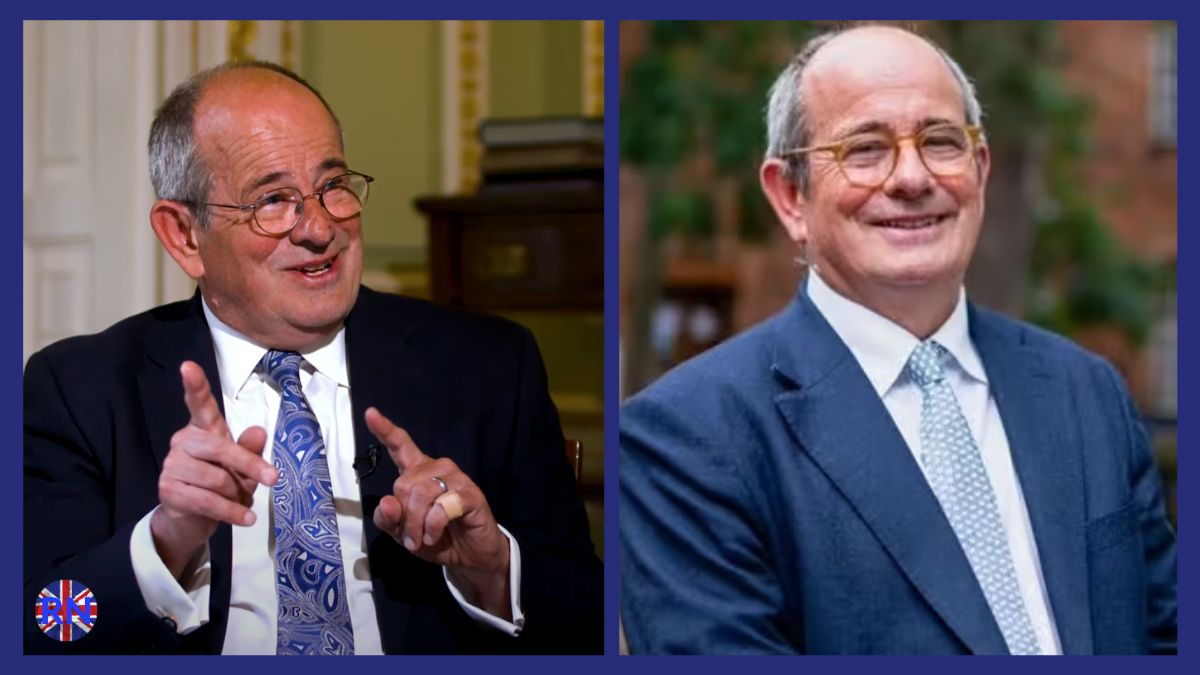
James Tooley is a name that has redefined how the world perceives education for the poor. Known for his groundbreaking research on low-cost private schools, Tooley has challenged long-held assumptions about how quality education can be delivered in developing nations.
Unlike many academics who focus on state-led education reforms, James Tooley has spent decades exploring how entrepreneurial schools—often located in slums and rural areas—can provide affordable, high-quality education to children who might otherwise be left behind. His journey is both intellectual and deeply human, driven by a belief that innovation and independence can transform learning outcomes for millions.
Today, James Tooley serves as the Vice-Chancellor of the University of Buckingham, continuing his mission to inspire reform in education systems worldwide.
The Early Life and Academic Journey of James Tooley
Born in Southampton, England, James Tooley grew up with a deep curiosity about knowledge, logic, and the structure of society. He completed his BSc in Logic and Mathematics from the University of Sussex, later earning a PhD from the Institute of Education, University of London.
Early in his career, James Tooley worked as a mathematics teacher in Zimbabwe. This experience profoundly shaped his understanding of global education inequalities. Seeing firsthand how local communities innovated to provide education—even without government support—sparked his lifelong fascination with grassroots schooling.
After returning to the UK, Tooley held positions at Oxford, Manchester, and Newcastle universities. His academic background and field experience combined to create a unique perspective on how education could be reimagined—outside the confines of state bureaucracy.
Discovering Low-Cost Private Schools
The defining moment in James Tooley’s career came when he began researching small, privately run schools in India, Ghana, and Nigeria. These schools, often operating on shoestring budgets, were established by local entrepreneurs serving their communities—not by international NGOs or government agencies.
Contrary to expectations, James Tooley found that these low-cost private schools achieved remarkable results. In many cases, students performed better than their peers in public schools despite paying minimal fees.
Key Findings from Tooley’s Research
- Low-cost private schools serve low-income families, often charging only a few dollars per month.
- Teachers in these schools are locally trained, motivated, and accountable to parents.
- Student outcomes, including literacy and numeracy, often surpass those in nearby government schools.
- Parents actively choose these schools because they value quality, discipline, and personalized attention.
Through extensive fieldwork documented in his book The Beautiful Tree, James Tooley provided empirical evidence that educational entrepreneurship could succeed where government intervention often failed.
The Global Impact of James Tooley’s Research
James Tooley’s research did not remain confined to academic journals—it sparked a global conversation about the role of private education in poverty alleviation.
His work inspired international organizations, including the World Bank and the International Finance Corporation (IFC), to reconsider how education projects could support private initiatives.
He founded several ventures aimed at improving access to education, including:
- Omega Schools in Ghana, offering affordable education through a sustainable model.
- EDUDEV, an education development foundation that promotes self-sustaining school networks.
- Partnerships with microfinance institutions to help school owners expand and improve facilities.
Awards and Recognition
- Gold Prize, IFC/Financial Times Private Sector Development Competition (2006)
- Sir Antony Fisher Memorial Prize for The Beautiful Tree (2010)
- Named one of the most influential education thinkers by The Guardian
These accolades highlight how James Tooley turned research into real-world impact, influencing policymakers, educators, and entrepreneurs across continents.
Criticism and Controversies
Despite widespread praise, James Tooley’s work has not been without criticism. Some education activists and scholars argue that promoting private schools undermines public education systems.
Critics claim that:
- Low-cost private schools may exclude the poorest families who cannot afford any fees.
- Teachers in such schools often receive lower pay and lack formal certification.
- Privatization could widen inequality if not accompanied by strong accountability.
James Tooley, however, counters these arguments with both data and philosophy. He maintains that choice and competition drive improvement, even within public systems. By empowering parents, low-cost schools stimulate accountability and innovation—something often missing in bureaucratic systems.
His stance continues to fuel debate about how education should be structured in developing economies, ensuring that James Tooley remains a pivotal figure in education policy circles.
James Tooley’s Vision for the Future of Education
Looking ahead, James Tooley envisions a world where educational freedom becomes the norm rather than the exception. He advocates for systems that allow parents to choose, teachers to innovate, and schools to compete on quality and affordability.
In his role at the University of Buckingham, Tooley is promoting academic entrepreneurship and research focused on alternative education models. His mission extends beyond low-cost private schools—toward creating a culture of decentralized education innovation.
Core Principles of Tooley’s Vision
- Freedom in Education: Schools should be autonomous, responsive to community needs, and free from excessive government control.
- Accountability through Choice: When parents can choose, schools naturally strive to deliver better quality.
- Empowering Local Entrepreneurs: Local educators and entrepreneurs should lead educational change, not foreign aid agencies.
- Evidence-Based Reform: Education policies should be grounded in research and real-world outcomes.
For James Tooley, education is not merely a public service—it is a human enterprise, driven by creativity, dignity, and opportunity.
Conclusion: Why James Tooley’s Work Matters
In a world struggling to provide universal education, James Tooley stands out as a visionary who dares to think differently. His work reminds us that the answer to educational inequality may not always lie in government spending, but in local innovation and community empowerment.
Through decades of research, teaching, and leadership, James Tooley has reshaped global education discourse. His belief that low-cost private schools can offer dignity and hope to the poorest families continues to inspire change makers across the globe.
Ultimately, James Tooley’s journey teaches us one profound lesson: education thrives where there is freedom, accountability, and passion for learning.
FAQs
1. Who is James Tooley?
James Tooley is a British education scholar and Vice-Chancellor of the University of Buckingham, known for pioneering research on low-cost private schools in developing countries.
2. What is James Tooley famous for?
He is best known for his research and advocacy promoting low-cost private schools that provide quality education to children in poor communities.
3. What is “The Beautiful Tree” by James Tooley about?
It’s a book documenting his discovery of thriving private schools for the poor in India and Africa, challenging the assumption that only government can educate the poor.
4. What criticisms does James Tooley face?
Critics argue his model may exclude the poorest or undermine public education, though Tooley believes market-driven schools enhance accountability and choice.
5. What is James Tooley’s future vision?
Tooley envisions an education system based on freedom, innovation, and parental choice, where communities—not governments—drive learning improvements.
