

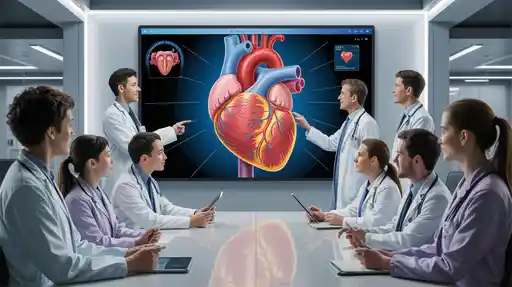
Complex anatomy and procedures confuse patients. Text and still diagrams often fail. Multiple studies show that motion and layered visuals raise comprehension.
For a hospital, that matters in two ways. First, informed consent becomes real. Patients grasp steps, risks, and aftercare. That lowers surprise complications and complaints. Second, adherence improves.
Use this as a practical rule. Replace long consent forms with a short targeted animation. Keep it specific to the procedure. Show only what the patient needs to know. Use clear narration and subtitles. This is where 3D animation services pay for themselves.
Why Should Hospital Leaders Buy 3D Animation Services Now
Costs for high-quality clinical care keep rising. Hospitals need tools that reduce readmissions, shorten stay time, and cut pre-op anxiety. Visual explanations reduce pre-op cancellations and streamline clinic time. Visual aids work in consultations and follow ups, saving clinician minutes that add up across dozens of patients daily.
The market data gives a second signal. The medical animation market has grown rapidly. Multiple industry reports show valuations in the hundreds of millions with double-digit compound annual growth. Analysts expect strong continued growth as hospitals, pharma, and medical schools invest in visual content.
Investing now captures three benefits. First, deliverables integrate into patient portals and EHRs. Second, content can be repurposed across departments. Third, you get measurable KPIs. Track watch time, comprehension scores, consent completion, and readmission changes. Those metrics justify the spend.
What Exact Problems Do Medical Animation Services Solve For A University
Medical schools teach complex physiology and microanatomy. Cadavers and slides still matter. Animated reconstructions complement them. Animation converts serial histology and physiology into a coherent flow. Students who watch targeted animations score higher on applied assessments in several trials.
Educational units benefit in other ways. Animated modules scale. A single module reaches thousands of students across campuses. Animation shortens the time faculty spend repeating demonstrations. Labs and simulation centers can align learning objectives to animated prework. That frees faculty to coach higher-order skills during in-person sessions.
This is the precise place to use medical animation services. Commission modules that match exam blueprints. Tag assets for reuse. Pair animation with short quizzes. Then measure learning gains and show ROI to deans.
How Do You Pick A Vendor For 3D Animation Services
Start with three filters.
First, clinical fidelity. Vendors must work with clinicians at the script phase. They should vet anatomy against imaging and peer-reviewed sources. Ask for a clinical sign-off workflow and sample scripts. Check their references with hospitals or med schools.
Second, production transparency. Request storyboards, timelines, and interim renders. You must be able to give clinical feedback without derailing schedules. Confirm the vendor supports file formats you need for your LMS, EHR, and display systems.
Third, measurement and support. Vendors should provide analytics on engagement and a plan for updates. Medical content ages. Ask about version control and a cost schedule for edits.
Ask to see case studies that show clear improvements in consent rates, reduced call-backs, or student test gains. Real outcomes beat fancy reels.
Which Clinical Areas Get The Fastest Wins From Animation
Procedures with hidden anatomy deliver the fastest returns. Examples include orthopedics, cardiac interventions, neurosurgery, and minimally invasive oncology procedures. Devices and mechanism-of-action presentations also convert well for both clinicians and patients.
Surgical teams benefit from preoperative walkthroughs that map patient imaging to the operation plan. Some centers combine 3D printing with animation for pre-op rehearsal.
Pharmacy and chronic disease management also gain. Animated modules on inhaler technique, insulin pump operation, and wound care reduce misuse and follow-up calls. For a small investment in content, case managers save hours per patient.
How To Integrate Animation Into Clinical Workflows Without Disruption
Embed animations where decisions happen. Put a short animation in pre-op clinics, discharge packets, patient portals, and student prework. Link animations to the specific CPT or procedure codes so staff can pull the right clip quickly. Train a small group of clinicians to use the assets in appointments. Share viewing metrics at weekly operational reviews to align use with goals.
Keep animations modular. Break long concepts into three to five focused clips. Short segments make it easy to insert the right clip into the workflow. That reduces clinician resistance.
What Are The Common Mistakes Leaders Make With Animation Projects
They commission a long generalist video to serve every need. Long videos do not map to specific consent or learning moments. They fail to track metrics. They skip clinical sign-off early and then face rework. They choose dazzling visuals over clarity. The right balance is clinical accuracy, brevity, and clear learning objectives.
Closing
Choose a focused pilot. Commit a small budget and a short timetable. Require clinical sign-off and simple outcome measures. Use one vendor for a unified production workflow and version control. When you see measurable gains, expand across procedures and curricula.
Start with one concrete question. Which procedure causes the most post-op calls this quarter? Address that problem first with a targeted 3D clip. When the calls fall and comprehension rises, you will have the proof you need to scale 3D animation services and medical animation services across your institution.
