

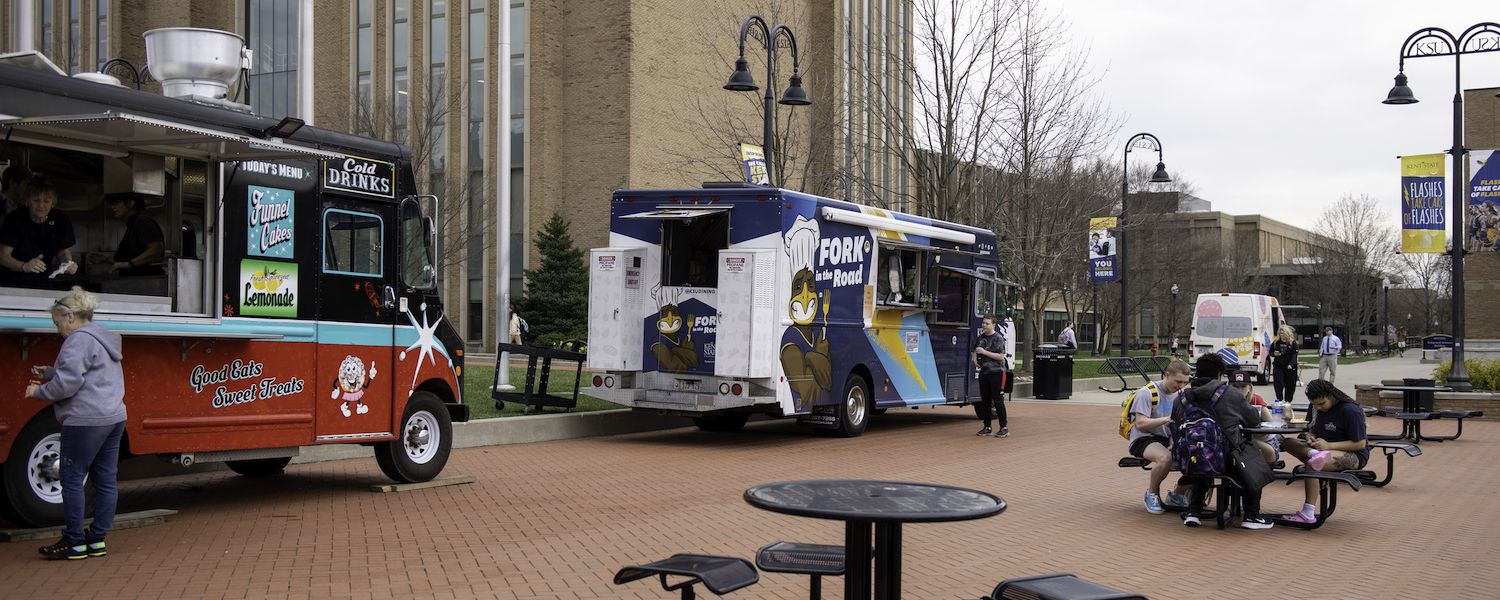
You’ve lived in your city for years, maybe decades. You know your way around. You have your favorite neighborhoods, your regular routes, your established patterns. Then you start following food trucks, and suddenly you’re discovering places you never knew existed. Streets you’ve never walked down. Parks you’ve never visited. Corners of your city that were hiding in plain sight.
The Trail of Trucks
Food trucks don’t stay put. They move through the urban landscape like modern-day caravans, and if you want to find them, you have to follow. This simple fact transforms passive city dwellers into active urban explorers.
When a food truck you love posts that they’ll be at an office park across town, you face a choice. You can skip it, or you can venture into unfamiliar territory. More often than not, curiosity wins. You plug the address into your phone, and suddenly you’re navigating streets you’ve never driven, walking through neighborhoods that were just names on a map.
What starts as a quest for lunch becomes an education in urban geography. You discover that the industrial area you’d written off as boring actually has interesting architecture. That park you’d never visited is surprisingly beautiful. That neighborhood you’d never explored has a character and energy you never expected.
Breaking the Routine Grid
Most people operate on a surprisingly small grid within their cities. Home, work, maybe a few favorite restaurants or shops. They travel the same routes repeatedly, creating mental maps that exclude vast portions of their surroundings.
Food trucks disrupt this pattern. They appear in unexpected locations that don’t fit your usual circuit. Suddenly you’re visiting the university campus you’d never had reason to explore. Or that waterfront area you’d always meant to check out. Or the business district that’s twenty minutes in the wrong direction from your normal haunts.
Food trucks in Melbourne have mastered the art of strategic placement, often positioning themselves in transitional spaces, overlooked plazas, and emerging neighborhoods that locals might not otherwise visit. Following them creates a connect-the-dots map of your city that reveals patterns and possibilities you’d never noticed.
Creating Personal Landmarks
As you follow food trucks around your city, you create a personal mythology of places. Each location becomes associated with a specific meal, a moment, a conversation. Your city transforms from a general environment into a collection of specific, meaningful spots.
You remember the corner where you ate lunch during that stressful week at work. The park where you met your friend and tried that new cuisine. The waterfront where you watched the sunset while finishing those tacos. These become your landmarks, more meaningful than the official tourist attractions because they’re tied to your actual lived experience.
The Long-Term Relationship
Over months and years of following food trucks, you develop a relationship with your city that’s both broader and deeper than what most residents ever achieve. You know more neighborhoods, more public spaces, more corners and pockets of the urban landscape.
You become someone who can give better recommendations to visitors. Who knows alternative routes and hidden spots. Who understands the personality of different areas. Who feels genuinely connected to the full breadth of your city rather than just your small corner of it.
Beyond Tourism
The beauty of this education is that it’s not tourism. You’re not visiting with a guidebook and a camera. You’re living, eating, moving through space for real reasons. The knowledge you gain is practical and embodied. You’re not learning about your city. You’re experiencing it.
Food trucks are the professors in this ongoing education, and lunch is the curriculum. Every meal is a class session, every location a lesson. Your city becomes less familiar and more interesting, which is exactly the opposite of what usually happens over time.
You thought you knew where you lived. The food trucks taught you otherwise.
