

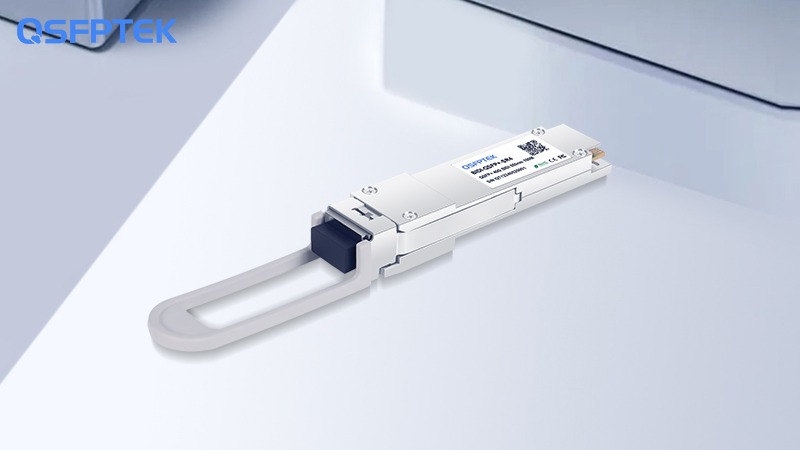
As modern data centers continue to scale compute density, the pressure on Top-of-Rack (ToR) network connectivity grows significantly. High-performance servers equipped with multi-core CPUs, NVMe storage, and GPU accelerators generate east-west traffic levels far beyond the capabilities of traditional 10G uplinks. While 25G and 100G technologies dominate new-generation designs, 40G SR4 remains one of the most practical, cost-efficient, and deployment-friendly solutions for ToR environments that require predictable performance without drastic infrastructure changes.
40G SR4: A Practical Bridge Between Legacy and Next-Gen Architectures
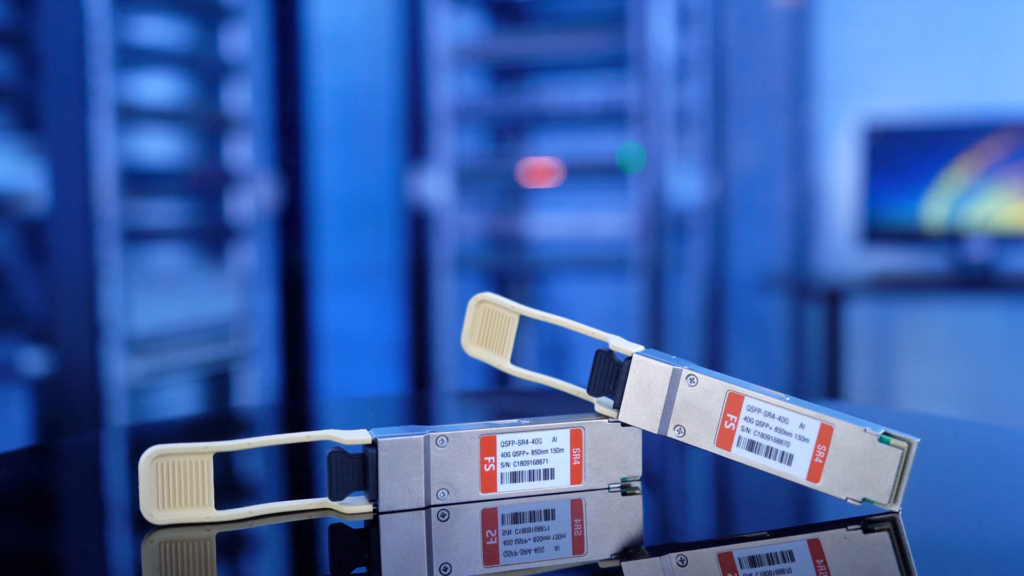
The 40G SR4 transceiver (QSFP+ form factor) uses four 10G lanes transmitted over parallel multimode fiber, typically OM3 or OM4. This design allows it to deliver:
Low-latency, short-reach connections are ideal for ToR and mid-row deployments
High throughput without re-cabling the entire fiber plant
Compatibility with existing 10G infrastructures through breakout modes (40G → 4×10G)
For organizations transitioning from 10G to higher speeds, 40G SR4 offers a seamless interoperability path, avoiding the cost and complexity of jumping directly to 100G.
Enhancing ToR Server Connectivity
High-Density Uplinks With Predictable Performance
In a typical ToR architecture, each rack contains dozens of servers connected to one or two ToR switches. As virtualization density and GPU workloads rise, the uplink capacity becomes a bottleneck.
40G SR4 uplinks provide:
4× the bandwidth of 10G without increasing the number of physical connections
Better burst absorption capacity for microservices and VM migrations
Stable throughput with consistent sub-microsecond latency
This makes it ideal for racks hosting compute-intensive applications such as AI inference nodes, container clusters, and distributed storage gateways.
Cost-Effective Scaling for Existing Fiber Plants
Compared with 25G/100G deployments, which may require newer fiber grades or more stringent loss budgets, 40G SR4 has:
Mature optics are priced significantly lower than newer-generation modules
Wide compatibility with existing OM3/OM4 infrastructure
Straightforward installation with MTP/MPO-12 fiber connectivity
For data centers aiming to scale rack bandwidth without massive capital investment, 40G SR4 provides one of the highest ROI options available.
Simplified Cabling and Rack Management
40G SR4 reduces cable clutter by replacing four 10G links with a single parallel-fiber link. Benefits include:
More space in cable trays and racks
Better airflow and lower cooling costs
Faster deployment and easier troubleshooting
In high-density racks running 48+ servers, even small improvements in cable management translate to measurable operational efficiency.
Ideal for Mid-Sized Data Centers and Enterprise Clouds
Not every environment requires the jump to 100G or 400G. Many enterprise clouds, departmental clusters, university HPC labs, and edge data centers find 40G SR4 to be the perfect balance of:
Bandwidth
Latency
Cost
Deployment complexity
Its widely documented performance and long-term vendor support make it a stable, low-risk choice for ToR modernization.
Conclusion
40G SR4 continues to play a crucial role in modern ToR designs by delivering a reliable, affordable, and easily deployable upgrade path for data centers evolving beyond 10G. Its combination of lane-parallel architecture, compatibility with existing multimode fiber, and strong cost-performance ratio makes it ideal for server-to-switch connectivity in high-density racks. For enterprises looking to modernize their infrastructure without overhauling their fiber plant or adopting more expensive next-gen optics prematurely, 40G SR4 remains one of the smartest and most practical solutions in the market.
