

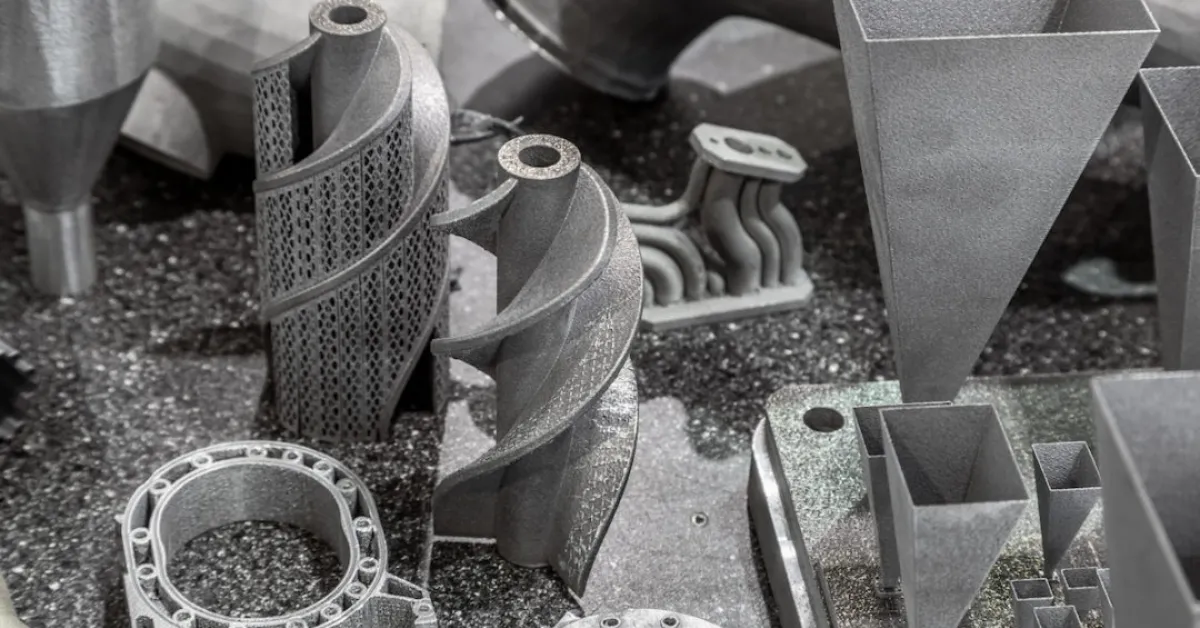
The 3D printing of metals has transformed the advanced manufacturing world. The technology is currently driving the industries, including healthcare, at a speed that was only imagined futuristically several years ago, with the components being stronger and having more design freedom than ever. Due to the increasing number of manufacturers adopting the technology, there has been a need to know how metal 3D printing works and why it is particularly important to the survival of business in the coming industrial age.
The paper will elaborate on the major processes, benefits, and applications of metal 3D printing and how firms like AIXI HARDWARE, Prototyping and Manufacturing Services are facilitating firms to actualize innovation.
What is Metal 3D Printing?
Metal 3D printing is the process whereby the metal parts are created through deposition of the metal layers either in powder form or using metal wire form. Compared to the traditional processes, such as CNC machining, whereby the machine material is in the form of a solid block, the incremental production only contributes to the material as and when it is needed. This will lead to fewer wastages as well as enable the complex shapes to be produced, which cannot be prepared using the traditional methods of production.
Metal 3D printing is between rapid production to end-use and prototyping and is, hence, optimal in the industries requiring flexibility and accuracy.
Principal Metal 3D Printing Processes
There are many metal 3D printing techniques available today, each optimized for certain design objectives, material constraints, and production sizes. The most typical methods applied in Industrial 3D Printing Services are:
1. Selective Laser Melting (SLM) / Direct Metal Laser Sintering (DMLS)
Both DMLS and SLM make use of a powerful laser that melts or fuses thin layers of powdered metal in a state of controlled environment. After a single layer is fused, another layer of powder is added to the build platform, and the process continues until the whole component is built.
Materials: Aluminum, titanium, stainless steel, cobalt-chrome, and Inconel.
Applications: Aerospace parts, medical implants, high-performance auto parts.
Advantages: Exceptional strength, accuracy, and surface finish.
2. Electron Beam Melting (EBM)
EBM resembles SLM except that an electron beam is utilized instead of a laser. It operates in a vacuum, and thus it can be used with reactive alloys like titanium. It forms thick, dense portions with reduced residual stress.
Advantages: High purity, excellent mechanical properties, and high metallurgical bonding.
Applications: Aerospace components, orthopedic implants, and high-stress mechanical components.
3. Binder Jetting
In binder jetting, a liquid binding agent is sprayed on layers of metal powder. The printing is followed by printing with another metal in the part, and then sintering or infiltrating the part to achieve the final density.
Benefits: Higher build speed, reduced cost, and scalability for production.
Applications: Tooling, spare parts, and small to medium production runs.
4. Directed Energy Deposition (DED)
Metal wire or powder is melted down as we use a laser or electron beam to deposit it onto a surface, as we use DED. It is widely used in the repair of parts that have been damaged or when adding features to metal parts.
Benefits: Ideal for part restoration and big builds.
Applications: Turbine blade repair, aerospace repair, and industrial molds.
Benefits of Metal 3D Printing
The influence of metal 3D printing goes well beyond quicker prototyping; it’s changing the way engineers design and make products. Below are several of its most substantial advantages:
1. Design Freedom beyond Precedent
Traditional manufacturing is limited to what can be machine or cast. Metal additive manufacturing removes those boundaries, and complex geometries, internal channels, and light lattice structures with reduced material consumption are possible, and the integrity has been maintained.
2. Material Efficiency and Sustainability
As a 3D printing process is merely a staple of metal, the amount of waste is much less than any conventional machining process. This will save time and money, which is a major priority in modern manufacturing.
3. Quick Prototyping and Production
In the industry sectors that thrive on innovation, the 3D printing of metals accelerates the developmental processes. The engineers can change the digital designs to functional prototypes within days, and not weeks. Working together with the leaders in the industry in Industrial 3D Printing Services will ensure the reliability of their services and delivery of production quality results without the long lead times.
4. Strength and Durability
The 3D printed metals are as Good and possibly even better than the parts that are manufactured more traditionally. The degree of accuracy of microstructure and inner density ensures high performance in extreme conditions.
5. Customization and On-Demand Production
Metal additive manufacturing is used in the mass customization of a unique one-time medical implant to a customized aerospace bracket. The components can be printed on order, and the inventory costs are minimized, and the supply chains are reduced.
Applications of Metal 3D Printing
The flexibility of metal additive manufacturing makes it appropriate for numerous industries:
Aerospace and Defense
Light yet strong components, including turbine blades, heat exchangers, and structural brackets, can be produced by metal 3D printing. This automatically results in better fuel consumption and performance since the weight is reduced.
Automotive
Automotive manufacturers use metal 3D printing to design engine parts, custom parts, and performance part improvement. It allows rapid iteration, so that time spent on concept testing is minimized.
Medical and Dental
Accuracy and biocompatibility are also used in orthopedic implants, dental crowns, and surgical devices. Any of the components can be tailored to the anatomy of a patient to be more comfortable and more efficient.
Energy and Industrial Equipment
The metal 3D printing is in the energy sector, where it creates strong components such as nozzles, pumps, and heat exchange units that may withstand extreme conditions.
Tooling and Molds
Metal 3D printing is applied by companies to make conformal cooling channels in molds, which makes tools more efficient and durable.
Partnering with Metal 3D Printing Experts
Removal of metallic additive manufacturing is a task that requires more than a suitable machine, besides necessitating engineering expertise, material experience, and d post-processing facility. It is where AIXI HARDWARE Prototyping and Manufacturing Services come in.
AIXI offers the best precision engineering with the latest additive technology as high-end 3D printing Solutions in the industrial sector. The AIXI team ensures that all its components are beyond the quality, strength, and accuracy specifications, whether it is the prototype or the mass production. AIXI will provide the results that help change the boundaries of what can be possible, whether it is a single custom component or a batch of production-scale components.
Conclusion
Not just a manufacturing phenomenon a metal 3D printing is the cradle of a new industrial revolution. It offers design freedom, cost-effectiveness, and excellentperformancece making it possible to rethink what can be done.
The AIXI HARDWARE Prototyping and Manufacturing Services experience allows businesses to discover the complete potential of the Industrial 3D Printing Services and develop faster, smarter, and stronger. The age of manufacturing has come, and it is being stamped in metal.
